Lead Batch 2 for UPSC MainsFor Mains 2027 aspirants · 24 weeks · In English & Hindi
Mains is the game. The final list is the prize.
We help you win both.
A 24-week answer-writing programme — 45 tests with instant Mains evaluation across GS1–GS4 & Essay, closing with a full-length finale. Starts 15 Jul 2026, ends 2 Jan 2027.
Hard work doesn't crack Mains. A system does.
You've read enough. What you need now is a weekly loop that forces you to write, face your gaps, and fix them. That's LEAD. Six months of grit. Wanderer to trail-leader.
Digest the syllabus week-by-week with subject themes and topper frameworks. No more reading without direction.
Write answers. Get structured instant feedback in under 5 minutes — Strengths & Weaknesses, Actionable items, Value addition, Model Answer, Keywords and PYQ mapping of each question.
Own your gaps. Accept the feedback. This is where toppers are made.
Write, review, rewrite — every week. Until your answer sheet reads like a topper's.
Write · Discuss. Repeat.
Every week feels the same because it has to. Consistency is the craft.
New tests land through each phase — every one anchored to the week's GS theme, building a full paper end-to-end.
Upload your answer. Get a structured breakdown — structure, depth, value-additions, PYQ links + topper's model answer. In under 5 minutes.
🇮🇳 In both English & HindiRahul Sir dissects the best and worst answers from the batch, plus dedicated PYQ sessions after each theme.
🇮🇳 HinglishRahul Sir. In your corner for 24 weeks.
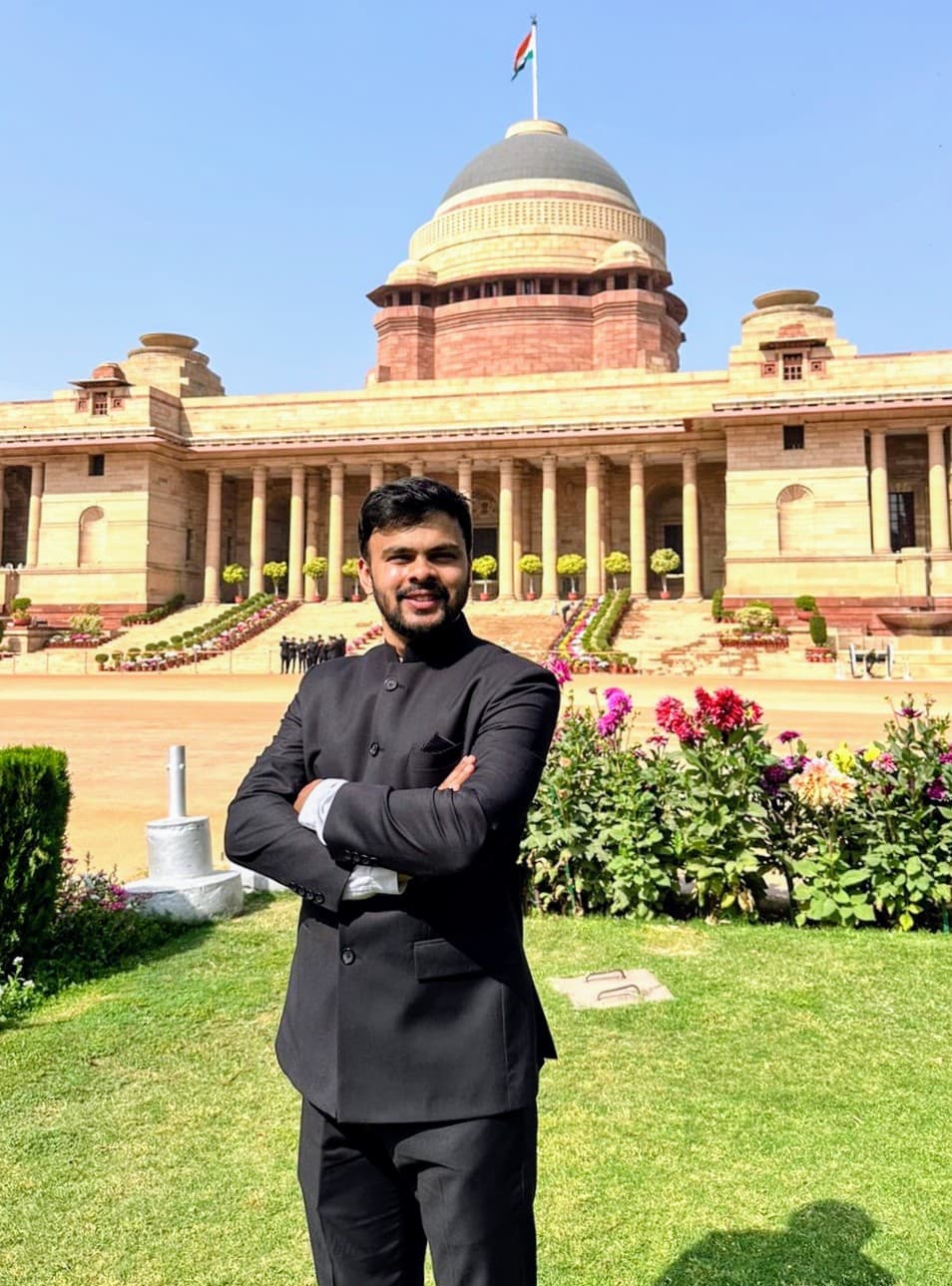
Rahul Shekhar sir leads the live discussions and PYQ sessions across the 24-week batch.
Rahul Shekhar
Rahul Shekhar secured AIR 75 in UPSC CSE 2025.
An IIT Kanpur engineer, he previously cleared ESE 2021 (AIR 3), IFoS Rank 46 (2024), and was allocated to the IRS in 2024.
In the LEAD Batch, you work from his answer-writing system directly — the frameworks, the PYQ playbook, the weekly iteration loop, the feedback rigor. Leads the live discussions across all 24 weeks.
Everything in one batch. Nothing missing.
45 Instantly-Evaluated Tests. 17 Live Sessions. Every Paper.
Phase 0 Orientation kicks off Wed, 15 Jul 2026. From there, 45 tests across GS1 → GS2 → GS3 → GS4 → Essay — each phase covering a full paper end-to-end — with 17 live discussion & PYQ sessions. The pace is non-negotiable — because ranks are.
The batch closes with five full-length finale mocks — Essay + GS1–GS4 (11 Dec – 30 Dec 2026) — each with model answers and PYQ mapping, then a closing Strategy Session on 2 Jan 2027.
| Date | Session | Type |
|---|---|---|
| Wed · 15 Jul | Orientation 1 | Live |
| Thu · 16 Jul | Orientation 2 | Live |
| Date | Session | Type |
|---|---|---|
| Sat · 18 Jul | History 1 | Test |
| Wed · 22 Jul | History 2 | Test |
| Sat · 25 Jul | History 3 | Test |
| Sun · 26 Jul | PYQ Discussion — History | Live |
| Wed · 29 Jul | Geography 1 | Test |
| Sat · 1 Aug | Geography 2 | Test |
| Wed · 5 Aug | Geography 3 | Test |
| Thu · 6 Aug | PYQ Discussion — Geography | Live |
| Sat · 8 Aug | Society 1 | Test |
| Wed · 12 Aug | Society 2 | Test |
| Sat · 15 Aug | Society 3 | Test |
| Sun · 16 Aug | PYQ Discussion — Society | Live |
| Wed · 19 Aug | GS1 Full Test | Test |
| Date | Session | Type |
|---|---|---|
| Sat · 22 Aug | Polity 1 | Test |
| Wed · 26 Aug | Polity 2 | Test |
| Sat · 29 Aug | Polity 3 | Test |
| Wed · 2 Sep | Polity 4 | Test |
| Thu · 3 Sep | PYQ Discussion — Polity | Live |
| Sat · 5 Sep | Governance 1 | Test |
| Wed · 9 Sep | Social Justice 1 | Test |
| Sat · 12 Sep | Social Justice 2 | Test |
| Sun · 13 Sep | PYQ Discussion — Governance & Social Justice | Live |
| Wed · 16 Sep | IR 1 | Test |
| Sat · 19 Sep | IR 2 | Test |
| Sun · 20 Sep | PYQ Discussion — International Relations | Live |
| Wed · 23 Sep | GS2 Full Test | Test |
| Date | Session | Type |
|---|---|---|
| Sat · 26 Sep | Economy 1 | Test |
| Wed · 30 Sep | Economy 2 | Test |
| Sat · 3 Oct | Agriculture 1 | Test |
| Sun · 4 Oct | PYQ Discussion — Economy & Agriculture | Live |
| Wed · 7 Oct | Science & Tech 1 | Test |
| Sat · 10 Oct | Science & Tech 2 | Test |
| Wed · 14 Oct | Environment 1 | Test |
| Thu · 15 Oct | PYQ Discussion — Science & Tech & Environment | Live |
| Sat · 17 Oct | Disaster Management 1 | Test |
| Wed · 21 Oct | Internal Security 1 | Test |
| Sat · 24 Oct | Internal Security 2 | Test |
| Sun · 25 Oct | PYQ Discussion — Disaster Mgmt & Internal Security | Live |
| Wed · 28 Oct | GS3 Full Test | Test |
| Date | Session | Type |
|---|---|---|
| Sat · 31 Oct | Ethics A — 1 | Test |
| Tue · 3 Nov | Ethics A — 2 | Test |
| Sat · 7 Nov | Ethics A — 3 | Test |
| Sun · 8 Nov | PYQ Discussion — Ethics Section A | Live |
| Tue · 10 Nov | Quote-based Questions | Test |
| Fri · 13 Nov | Case Study 1 | Test |
| Tue · 17 Nov | Case Study 2 | Test |
| Wed · 18 Nov | PYQ Discussion — Ethics Section B | Live |
| Fri · 20 Nov | GS4 Full Test | Test |
| Date | Session | Type |
|---|---|---|
| Tue · 24 Nov | How to write UPSC Essays | Live |
| Fri · 27 Nov | PYQ Discussion — Essay | Live |
| Tue · 1 Dec | Essay Test 1 | Test |
| Fri · 4 Dec | Essay Test 2 | Test |
| Tue · 8 Dec | Essay Test 3 | Test |
| Date | Session | Type |
|---|---|---|
| Wed · 9 Dec | Consolidation | Live |
| Fri · 11 Dec | Essay Full Test | Test |
| Tue · 15 Dec | GS1 Full Test — Finale | Test |
| Sun · 20 Dec | GS2 Full Test — Finale | Test |
| Fri · 25 Dec | GS3 Full Test — Finale | Test |
| Wed · 30 Dec | GS4 Full Test — Finale | Test |
| Sat · 2 Jan | Strategy Session | Live |
Coaching-grade mentorship. Not coaching prices.
100-learner cohort. Coaching-grade mentorship at a fraction of institute fees.
Other answer-writing programs
- ✗ Pre-recorded modules
- ✗ Generic feedback, slow turnaround
- ✗ 1:500 mentor ratios
- ✗ No mock-test discussion
- ✗ No strategy sessions
Lead Batch 2 for UPSC Mains
- ✓ 45 tests, instant Mains evaluation — UPSC frameworks + precision
- ✓ 17 live sessions & PYQ discussions with Rahul Sir
- ✓ Answer writing session recordings on LeanPrep
- ✓ Recordings & evaluations access until 30 Sep 2027
- ✓ Topper model answer every question
- ✓ Progress dashboard + PYQ mapping
- ✓ Closed Telegram cohort
- ✓ 5 full-length finale mocks — Essay + GS1–GS4
- ✓ In both English & Hindi medium welcome
Quick answers.
⭐ When does the batch start?
Phase 0 Orientation — Wed, 15 Jul 2026 (kickoff) and Thu, 16 Jul. First test: Sat, 18 Jul 2026. The batch runs 24 weeks and closes with the Strategy Session on Sat, 2 Jan 2027.
⭐ Who is this for?
UPSC Mains 2027 aspirants who've finished at least one syllabus pass and now need to crack answer writing. The 24-week programme walks through GS1 → GS2 → GS3 → GS4 → Essay, then a finale of full-length papers.
⭐ What exactly do I get in 24 weeks?
45 tests with instant Mains evaluation (topic-wise + full-length), 17 live sessions & PYQ discussions, structured instant feedback in under 5 minutes on every answer — structure, depth, value-adds, keywords, PYQ links + a topper model answer. 5 full-length finale mocks across Essay + all four GS papers. Closed Telegram cohort + progress dashboard.
What if I miss a live discussion?
All session recordings are available on the LeanPrep platform and the closed Telegram. You never fall behind.
How long will I have access to recordings and evaluations?
All tests, video recordings of sessions, and evaluations will be available on the LeanPrep platform until 30 September 2027.
Will session recordings and masterclass videos be available?
Yes! All answer writing sessions and masterclasses conducted by LeanPrep — both till date and in the future — will be available on the LeanPrep platform for all LEAD Batch students.
How does the instant Mains evaluation work?
Upload your answer (PDF) on leanprep.in. In under 5 minutes, you get a question-by-question breakdown — what's missing, what cost you marks, what a topper-grade answer looks like, and the PYQs your question is closest to. Not generic advice. Named gaps.
Can I upload handwritten answers?
Yes. Write on paper, scan or photograph the sheet, upload as a PDF. The evaluation reads handwritten answers — same evaluation in minutes.
How are questions picked?
Every question is anchored to the syllabus theme of the week and drawn from a mix of PYQs, current affairs and high-probability themes flagged by the LeanPrep team's trend analysis. Each phase covers a full GS paper end-to-end so you're never writing in isolation from your syllabus position.
Refund policy?
Full refund within 7 days of payment, provided you haven't attended your second live discussion. After that window, no refund — we commit through the rest of the batch together, and so do you.
What happens after the batch ends?
The batch closes with the Strategy Session on Sat, 2 Jan 2027 — a debrief with a personal answer-writing diagnosis, a phase-wise revision plan for Mains 2027, and continued access to your evaluation history until 30 Sep 2027 — so you can keep iterating long after the batch closes.
Who will lead the discussions?
Rahul Sir leads the live answer discussions and PYQ sessions across the 24-week batch. Any additional co-mentor sessions will be announced in the cohort.
Can Hindi medium students join?
Yes — both Hindi and English medium students are welcome. Discussions will accommodate both mediums.
Follow · Join · Enrol
Write differently. Jump ranks.